Structural Drying and Dehumidification in Albany, CA
Albany's bungalows, apartments and condominiums share walls and floors, so moisture can travel between rooms and units, and crews dry the whole structure with air movers, LGR dehumidifiers and daily logged readings.
(888) 774-9605Plan the drying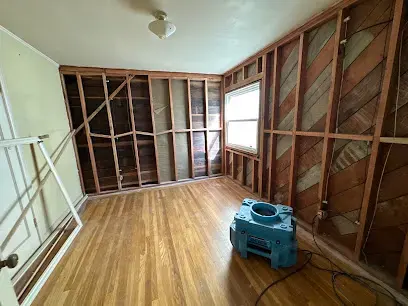
Structural Drying and Dehumidification in Albany: what the crew does first
Structural drying is the part of a water job that nobody sees working. Once the water is out, the walls, floors and framing still hold moisture, and equipment has to pull it out in a controlled way. Albany's mix of bungalows, apartment buildings and condominiums means that moisture can ride shared walls and floors into places no one thought were wet.
Water still moving in Albany?
(888) 774-9605Ask about dryingFirst steps for structural drying and dehumidification
- 1
Map and set up
Moisture is mapped and equipment is sized to each room.
- 2
Run the equipment
Air movers and dehumidifiers run on the wet materials.
- 3
Read every day
The same points are metered daily and equipment is moved.
- 4
Release at dry goal
Equipment comes out when every point matches the dry reference.
What does structural drying and dehumidification cost in Albany, CA?
Drying cost follows the class of the loss, meaning how much surface is wet and how dense the materials are. Expect roughly $1,000 to $3,000 for one area, and up to $20,000 for Class 3 or 4 jobs.
Class 1 or 2, one area
$1,000 to $3,000
- Air movers placed
- LGR dehumidifier
- Daily logs kept
Several rooms
$3,000 to $7,500
- Cavity drying
- Multiple drying zones
- Space below dried
Class 3 or 4
$7,500 to $20,000
- Desiccant drying
- Plaster or hardwood
- Extended monitoring
Ranges are typical, not a quote: the water category, square footage, material class and how fast drying started move the number most. Run the water damage cost calculator for a closer range.
How structural drying and dehumidification is handled in Albany, step by step
- 1
Measure
Meters and a thermal camera map the wet areas.
- 2
Set equipment
Air movers and dehumidifiers go in by room size.
- 3
Monitor daily
Readings show what is still wet and what has dried.
- 4
Remove and report
Equipment comes out and the drying log is handed over.
What the equipment does
- Air movers push air across wet surfaces to lift moisture
- LGR dehumidifiers pull that moisture out of the room air
- Desiccant units handle dense materials such as concrete or plaster
- Ducting and injectors dry wall cavities without tearing them open
Equipment is sized to the cubic footage of each room and the type of material, not set up by habit or by a single formula.
Why daily readings matter
Every visit, the crew meters the same points again and compares them with a dry reference. Numbers that stop falling mean equipment needs to move. Numbers that reach the dry goal mean it can come out. That cycle, written down each day, is what the S500 standard calls for and what an adjuster expects to see.
Dense buildings, shared walls
In a multi-unit building, drying can mean working in several homes at once, with readings in each. Most units built in Albany after 1950 are apartments and condominiums, so the same wet wall may belong to more than one household. The first step is usually water extraction, and drying follows.
Structural drying and dehumidification across Albany and nearby towns
Structural drying covers all of ZIP 94706, including Albany Hill, West Albany, East Albany, Ocean View, the Solano Avenue area and the Waterfront District, in houses, multi-unit buildings and commercial spaces, with readings kept per unit.
The same service nearby: structural drying and dehumidification in San Pablo, El Cerrito, Richmond.
Related water damage services in Albany
Structural Drying and Dehumidification questions in Albany, CA
How long does structural drying take?
Usually several days, though dense materials such as plaster, concrete and hardwood can take longer. Readings decide, not a calendar.
Why are dehumidifiers needed as well as fans?
Fans move moisture off surfaces into the air, and dehumidifiers remove it from the air so it does not settle again.
What does LGR mean?
Low grain refrigerant. These dehumidifiers pull more moisture from cool, damp air than standard units.
Can walls be dried without opening them?
Often, using injectors and vented baseboards that dry the cavity from within, which keeps repair costs lower.
Who decides when the equipment can come out?
The readings. When every measured point matches the dry reference, the crew removes the equipment and records it.
Does drying apply to storm and sewage losses?
Yes, after the contaminated materials are removed. See sewage backup cleanup for that first stage.
Wet walls or floors in Albany?
Structural drying works from readings, so equipment stays only as long as the materials need it and no longer.
San Pablo, CA · Contra Costa County · open 24/7