Structural Drying and Dehumidification in Richmond, CA
Water that reaches studs, subfloor and the insides of walls does not leave on its own. The drying crew sets air movers and dehumidifiers by moisture class and keeps them running until the readings match a dry sample.
(888) 774-9605Start the Richmond dry-out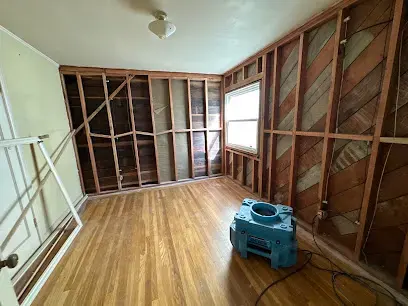
Structural Drying and Dehumidification in Richmond: what the crew does first
Richmond's wet season runs from late October to April, with most rain falling in storms between November and March, and that is when most dry-out calls come in. Water that has been pulled off the floor still sits in framing, subfloor and wall cavities.
Water still moving in Richmond?
(888) 774-9605Richmond structural dryingFirst steps for structural drying and dehumidification
- 1
Stay out of wet rooms
Keep traffic off wet floors.
- 2
Turn off wet electrics
Leave breakers for wet rooms off until the panel area is dry.
- 3
Keep wet materials
Carpet, pad and drywall are measured before anything is thrown out.
- 4
Call for drying
Dry-out starts with a moisture map of every wet surface.
What does structural drying and dehumidification cost in Richmond, CA?
In Richmond, CA, structural drying typically runs $1,000 to $20,000. The moisture class, the number of rooms and wet cavities and the length of the drying period decide where a job lands.
Class 1 or 2, one area
$1,000 to $3,000
- Air movers placed
- LGR dehumidifier
- Daily logs
Several rooms
$3,000 to $7,500
- Wall cavities dried
- Multiple drying zones
- Space below checked
Class 3 or 4
$7,500 to $20,000
- Desiccant drying
- Hardwood or plaster
- Extended monitoring
Ranges are typical, not a quote: the water category, square footage, material class and how fast drying started move the number most. Run the water damage cost calculator for a closer range.
How structural drying and dehumidification is handled in Richmond, step by step
- 1
Map the moisture
Meters mark every wet material.
- 2
Set the machines
Air movers and dehumidifiers are sized to the class of loss.
- 3
Measure daily
Readings at the same marks show which areas are drying.
- 4
Release the equipment
Machines leave when materials match a dry reference sample.
Four classes of loss
Class 1 is the least water into low-absorbing materials, Class 2 reaches carpet and some wall height, Class 3 comes from above and soaks ceilings and walls, and Class 4 involves dense materials like concrete, plaster and hardwood. The class sets the machines.
Placing the equipment
Air movers are matched to the evaporation load of each wet surface and aimed to sweep air along it. Low grain refrigerant dehumidifiers pull moisture from the air, and desiccant units take over for dense materials. Walls are opened or vented when the readings show water inside.
Daily readings decide
Each day the tech measures temperature, humidity and moisture at the same marked spots and compares them to an unaffected sample. Equipment is moved or removed as areas dry, and the machines stay until the numbers hold.
Where this fits
Drying follows water extraction and often continues alongside hardwood floor water damage work or an opened ceiling. A written log of every visit goes into the claim file. Small jobs may need only a few machines, while a large loss can need many units spread across several rooms.
Structural drying and dehumidification across Richmond and nearby towns
Structural drying covers every Richmond ZIP, 94801, 94803, 94804, 94805 and 94806, including Point Richmond, Marina Bay, Brickyard Cove, the Iron Triangle, Hilltop, Richmond Heights, Parchester Village and Southwest Richmond Annex homes.
The same service nearby: structural drying and dehumidification in San Pablo, El Cerrito, Pinole.
Related water damage services in Richmond
Structural Drying and Dehumidification questions in Richmond, CA
What do Class 1 through Class 4 mean?
They sort water losses by how much moisture materials hold and how fast it leaves. Class 4 covers dense materials such as concrete, plaster and hardwood.
How do I know the building is dry?
Meters and daily readings compare wet materials with an unaffected sample. Touch and feel are not enough, so the job closes on the numbers.
Why are the machines so loud and so many?
Each wet surface and cavity has its own evaporation load. Enough air movement and dehumidification make drying fast and keep it from stalling.
How long does structural drying take?
Often three to five days for a small Class 1 or 2 loss and longer for Class 3 or 4. Readings, not the calendar, end it.
Do walls always have to be opened?
No. Walls are vented, drilled or opened only where meters show water still inside. Many wet cavities can be dried through small openings.
Wet walls in Richmond? Start the dry-out before moisture spreads.
Water hidden in studs and subfloor keeps doing damage. The crew maps it, places the machines and logs readings until everything tests dry.
San Pablo, CA · Contra Costa County · open 24/7