Structural Drying and Dehumidification in Pinole, CA
After a wet winter storm or a pipe failure, framing, subfloors and wall cavities in a Pinole home need to be dried fully, using equipment sized to the water and readings that decide when to stop.
(888) 774-9605See the drying plan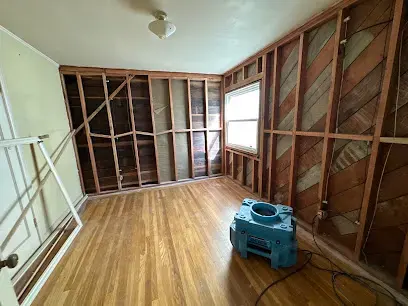
Structural Drying and Dehumidification in Pinole: what the crew does first
Structural drying is the part of a water job that gets the building back to normal moisture. Once the water is out, wood framing, drywall, plaster and concrete still hold moisture that evaporates slowly, and trapped water breeds odors and rot. The S500 standard defines drying in classes, from one affected area to deep saturation in dense materials, and the plan follows the class.
Water still moving in Pinole?
(888) 774-9605Ask about dryingFirst steps for structural drying and dehumidification
- 1
Measure
Meters and imaging show where the structure is wet.
- 2
Place equipment
Equipment is placed to match the class of water.
- 3
Monitor daily
Readings are repeated on marked spots and equipment is adjusted.
- 4
Release the equipment
Everything comes out only when readings match dry goals.
What does structural drying and dehumidification cost in Pinole, CA?
Structural drying usually costs $1,000 to $20,000. A small, shallow loss in one area is the low end, and deep saturation in dense hardwood or plaster that needs desiccant drying and extended monitoring is the high end.
Class 1 or 2, one area
$1,000 to $3,000
- Air movers
- LGR dehumidifier
- Daily logs
Several rooms
$3,000 to $7,500
- Cavity drying
- Multiple zones
- Crawl space drying
Class 3 or 4
$7,500 to $20,000
- Desiccant drying
- Hardwood or plaster
- Extended monitoring
Ranges are typical, not a quote: the water category, square footage, material class and how fast drying started move the number most. Run the water damage cost calculator for a closer range.
How structural drying and dehumidification is handled in Pinole, step by step
- 1
Map the water
Meters and thermal imaging show where the structure is wet.
- 2
Set the equipment
Equipment is placed to match the class of water.
- 3
Log and adjust
Daily readings steer equipment moves and show progress.
- 4
Confirm dry
Final readings match the drying goal and equipment is removed.
Equipment and how it is chosen
- LGR dehumidifiers pull water vapor out of the air and keep drying going
- Air movers blow across surfaces to speed evaporation from walls and floors
- Desiccant units handle dense materials like hardwood, plaster and cold, damp spaces
- Injection and cavity drying reach water trapped inside walls without large demolition
Equipment counts follow room size, material and wetness, not a rule of thumb, which is why the first visit includes a full set of readings.
Why winter drying is slow
Pinole's wet season runs from October to April, when cool damp air slows evaporation and homes stay closed up. A dehumidifier works against that humidity, and heat or desiccant drying helps where the weather will not. Readings, not the calendar, decide when equipment can leave. After a storm, storm and creek flood cleanup comes first when floodwater was involved, since contaminated materials must be removed before equipment is placed.
What gets logged
Every visit records temperature, humidity and moisture readings on the same marked spots, along with equipment placement. That log is the proof that the building reached dry goals, and an adjuster can read it without being on site. A small gap in the log is a gap in the claim, so water extraction records are kept alongside it.
Structural drying and dehumidification across Pinole and nearby towns
Drying crews cover every neighborhood in Pinole, among them Old Town, Pinole Valley, Pinole Vista and Nob Hill, plus ZIP code 94564 and the streets along Interstate 80, San Pablo Avenue and Appian Way.
The same service nearby: structural drying and dehumidification in San Pablo, Hercules, Richmond.
Related water damage services in Pinole
Structural Drying and Dehumidification questions in Pinole, CA
How long do air movers and dehumidifiers stay?
Until readings reach the dry goal for each material. Wood, plaster and concrete dry at different speeds, so no single schedule fits.
Why is equipment so loud and warm?
Dehumidifiers and air movers move a lot of air and release heat as they pull water out, which is normal while drying.
Can a house dry without opening the walls?
Sometimes, using vents, small holes and cavity drying. Opening is chosen when readings show water trapped behind drywall or insulation.
What if the floor feels dry but the readings say otherwise?
Surfaces dry first, and moisture lingers in the subfloor and framing, which is why meters decide when drying ends.
Does a dehumidifier from a store do the same job?
Not at the scale of a wet structure. Restoration units move far more water and are chosen for the room volume.
Wet walls or floors in Pinole?
Equipment sized to the water and daily readings are what turn a wet house into a dry one, and the log shows when it is done.
San Pablo, CA · Contra Costa County · open 24/7