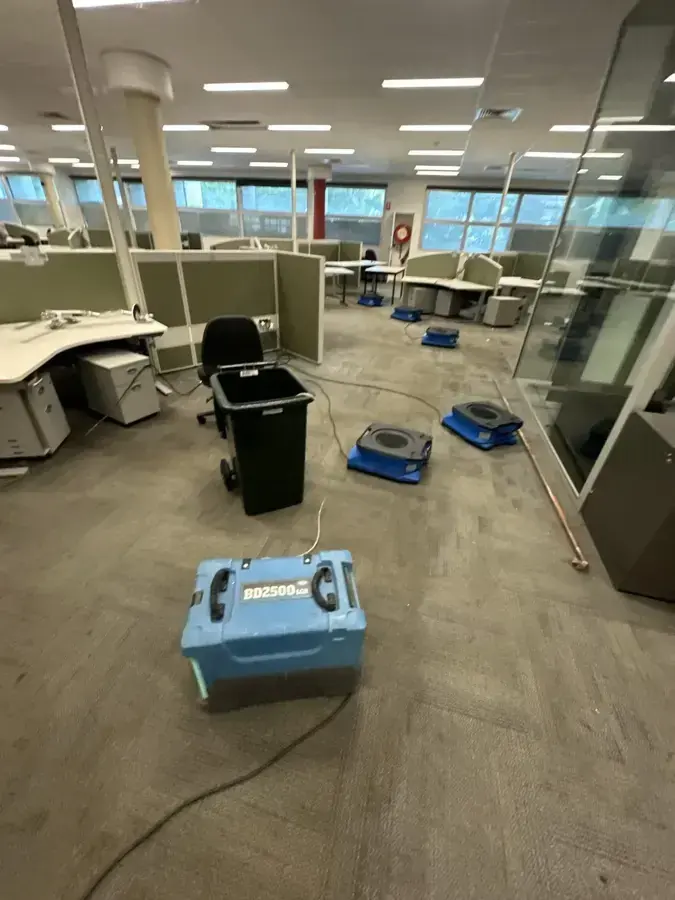
A burst pipe in a restaurant kitchen or a roof leak over a retail counter costs more than the repair. Every day the doors stay closed is a day without sales, so the plan for the first day matters.
Key takeaways
- Richmond has a state designated Main Street District along Macdonald Avenue, and retail centers in the Hilltop area.
- Stop the water, protect inventory and photograph the loss before anything is moved.
- A restoration crew documents each affected space so the owner and the insurer share the same record.
- Plumbing repairs need a City of Richmond permit, applied for through the iMS portal.
- Drying starts with extraction and moisture readings, and ends only when readings are normal.
The kinds of business buildings in Richmond
Macdonald Avenue is designated the city's Main Street District by the state, and the Macdonald 80 shopping center was resurrected by the redevelopment agency.
Retail also clusters around Hilltop, including The Shops at Hilltop. Point Richmond is known for owner operated shops, and the Craneway Pavilion at Marina Bay is an events center in the former Ford assembly plant.
A pipe failure in any of these buildings can affect the tenant who owns the problem and the one next door.
The Hilltop area also has a mall that opened in 1976, and a plan announced in 2021 would replace it with mixed use development. A building that changes hands or use may carry old plumbing into its next life.
The first day after a pipe or roof failure
The first step is to stop the water. A manager who knows where the shutoff is can limit the loss before anyone arrives.
After that, protecting the business means protecting what can be saved and recording what cannot.
A short written plan taped near the shutoff valve, with phone numbers for the landlord and the insurer, saves time when everyone is stressed.
Staff should be told which areas are off limits, and customers should be kept out of any room with wet floors or a sagging ceiling.
- Close the water shutoff or isolate the failed fixture.
- Switch off power to wet areas if it can be done safely.
- Move stock, paper records and electronics off the floor.
- Photograph every affected area, including the ceiling and stored goods.
- Tell the landlord, the property manager and the insurer.
What a restoration crew documents
For a business, documentation is a deliverable. The insurer wants to see how far the water went, what was wet and what was removed.
A crew keeps separate notes for each unit or room, with moisture readings and photographs. That record helps when a claim covers several tenants.
For a restaurant, the record may include kitchen equipment, stock and the areas that were closed. For a shop, it may include shelving, fixtures and inventory.
- Moisture maps of floors, walls and ceilings
- Photos before, during and after removal
- A list of materials taken out and why
- Daily drying logs with readings
How extraction and structural drying fit together
Standing water comes out first. Carpet, tile, wood and concrete floors each need a different approach.
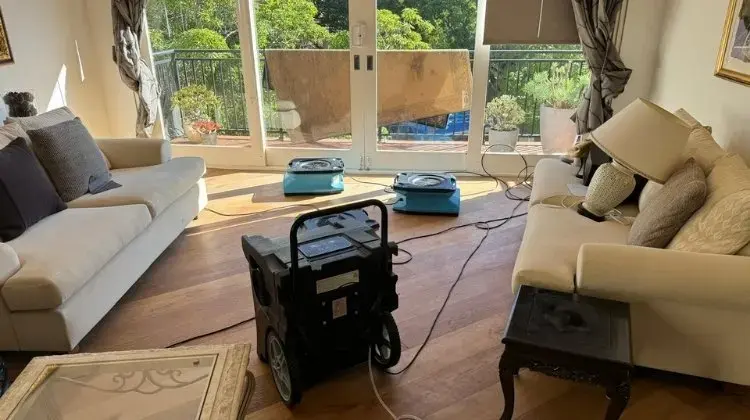
After extraction, air movers and dehumidifiers dry the structure. The structural drying work continues until readings in walls, floors and ceilings match dry reference points.
The commercial water damage service in Richmond follows that sequence for shops, restaurants and offices.
The crew describes what stays open and what is closed while equipment runs, so a manager can tell customers and staff what to expect.
Different spaces call for different drying
A retail shop with carpet and shelving dries differently from a restaurant with tile and stainless equipment. An office with cubicles and wiring presents another set of problems.
A crew chooses equipment by what the water touched. Carpeted areas may need pad removal, hard floors may need drying mats, and wall cavities behind fixtures may need small openings for airflow.
When several tenants share a building, the crew keeps separate logs for each unit, which makes it simpler to divide a claim between them.
Wet ceilings above a sales floor are a special concern, because tiles and drywall can fall without warning. A crew removes them early, which also lets air reach the wet insulation above.
- Retail: carpet, shelving and stock close to the floor
- Restaurants: tile, drains, walk in coolers and kitchen equipment
- Offices: carpet, drywall, ceilings and electronics
- Shared buildings: separate logs and containment for each unit
Permits and repairs
A City of Richmond building permit is required before anyone alters, repairs or improves a building. Most single trade permits, including plumbing, are issued on receipt and verification of the application documents, and applications go through the iMS portal.
Permits go only to property owners or their authorized agents, and to contractors who hold the credentials the city lists, including a workers compensation certificate and a City of Richmond business license.
The plumber handles the permit, while the restoration crew dries the structure so the repair is not closed over a wet cavity.
For a business, speed matters, but rushed work can lead to a second closure. A schedule that finishes drying before the repair keeps the doors open longer afterward.
A building owner who plans larger repairs should confirm with the city which work needs a permit before the contractor starts. The restoration crew can share its readings with the plumber and the permit applicant so the schedule fits together.
Getting ready before the next loss
A little planning shortens the next first day. Know where the shutoffs are, keep a current contact list and store stock above the floor.
The Richmond service page lists the other water jobs handled in the city. The San Pablo commercial page shows the same process used for neighboring business districts.
A quick walk through the building each season, with a look at ceilings, roof drains and under sinks, catches many failures before they become losses.
Questions
What should a business owner do first after a pipe failure?
Stop the water at the shutoff, switch off power to wet areas if safe, move stock off the floor and photograph everything.
Why does documentation matter for a business claim?
The insurer wants a record of how far water spread and what was removed. Moisture maps, photos and drying logs provide it.
Does plumbing work in Richmond need a permit?
Yes. A City of Richmond building permit is required for repairs, and most single trade permits are applied for through the iMS portal.
Can a business stay open during drying?
Sometimes. Phased drying can keep unaffected areas open, depending on the layout and where the water went.
Can the restoration crew work around opening times?
Often yes. Phased work can leave unaffected areas open, and some tasks can be scheduled for quiet periods.
Why are separate logs kept for each unit?
When a building has several tenants, separate logs make it easier to divide the claim and show what each space lost.