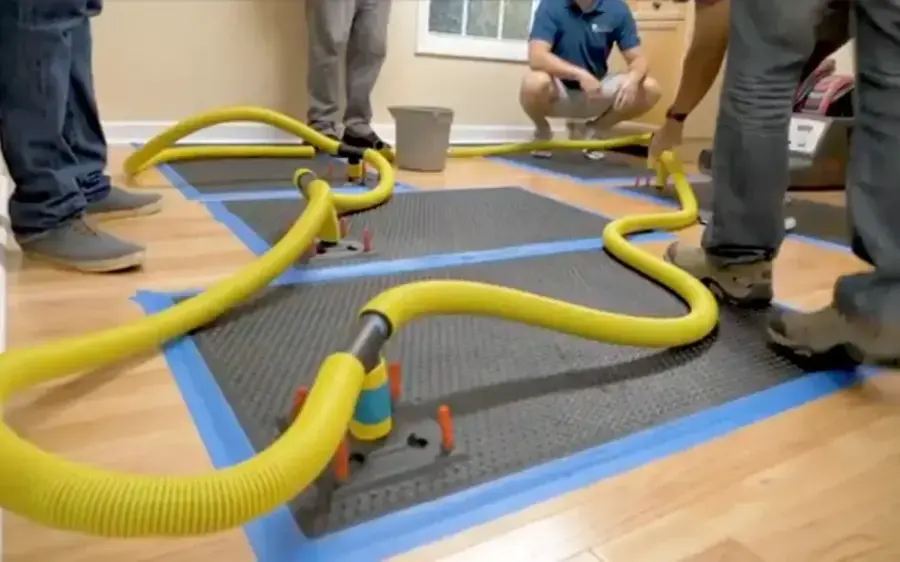
Albany is dense, and a lot of its older homes are small bungalows with wood floors. When water reaches those boards, speed matters more than finish.
Key takeaways
- More than half of Albany's housing stock was built before 1950, and homes from 1900 to 1950 were mostly single family bungalows.
- Wood floors take up water quickly and can cup, crown or buckle if they stay wet.
- Remove standing water, lift loose items and avoid sanding or sealing until the floor is dry.
- About 68 percent of Albany housing units have two bedrooms or fewer, so water spreads through small rooms fast.
- Moisture can travel through shared walls and floors, so drying checks neighboring spaces.
Why Albany bungalows and wood floors are a close pairing
The Albany General Plan says more than half of the city's housing stock was built before 1950. Homes built from 1900 to 1950 were mostly single family bungalows, and most units built after 1950 are apartments and condominiums.
Wood floors are a common feature of homes of that era. They are beautiful and they are also sensitive to water.
Albany's wet season runs roughly from November to February, which is when roof leaks, appliance failures and sewer overflows are most likely to put water on a floor.
A bungalow with wood floors in every room can have a lot of boards exposed to one leak, so a plan for the first day is worth making.
Where the water usually comes from in Albany
Albany has five waterways flowing through or bordering the city, and Codornices Creek and Cerrito Creek form its southern and northern edges. The city warns that flooding may occur in low lying areas and at high tide during storms.
After the storms of December 31, 2022, EBMUD reported sewer overflows at manholes in Albany, Berkeley and Alameda. EBMUD said overflows happen when rain enters the sanitary sewer system and overwhelms treatment capacity.
Closer to home, the usual sources are quieter. A roof leak in the wet season, a failing water heater or a washer in an apartment can all put water on a wood floor.
- Roof leaks during storms
- Water heater and appliance failures
- Pipe leaks inside walls
- Storm water entering at a low door or threshold
What water does to a wood floor
Cupping and crowning
Wood absorbs moisture through its underside and edges. When the bottom of a board is wetter than the top, the edges rise and the board cups.
If the surface is sanded while the board is still wet, the middle can later rise higher than the edges. That is called crowning.
The change can show up within a day or two of a leak, and it often looks worse than it is at first. A floor that has only begun to cup may flatten again as it dries.
Buckling
When boards swell so much that they push against each other, they lift off the subfloor. This is buckling, and it can happen across a room.
A buckled floor is much harder to save than one caught before the boards move.
First steps in the first stretch after a leak
The goal is to stop more water from getting under the boards and to give the wood a chance to release moisture.
Owners of small bungalows should check the rooms next to the wet one, because a short hallway or a thin wall does not stop water from spreading.
- Stop the source: close the shutoff valve or switch off the appliance.
- Pull up rugs, mats and furniture legs that sit in the water.
- Blot standing water with towels, but do not run a household vacuum on a wet floor.
- Open windows only if weather allows, and leave heavy sanding or sealing for later.
- Photograph the floor from several angles before anything is moved.
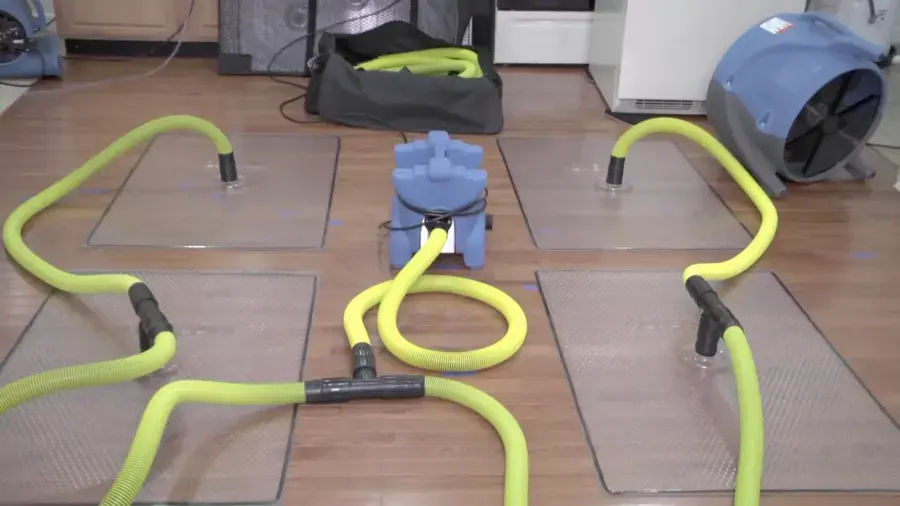
How drying mats and dehumidifiers work
A restoration crew places drying mats on the floor and connects them to a vacuum system. The mats pull moisture upward through the boards.
A dehumidifier lowers the humidity of the room so the boards give up water instead of absorbing it again. Daily wood readings show whether the process is working.
The method is described on the hardwood floor water damage page, and it works best when a crew starts early.
The crew also checks the subfloor under the boards with a meter. A dry surface over a damp subfloor can bring the problem back later.
- Panel drying mats on the wet area
- A dehumidifier sized for the room
- Daily moisture readings on the wood
- Removal of a few boards when they are too wet to dry in place
Shared walls, small rooms and hidden moisture
Albany's dense housing of bungalows, apartments and condos means moisture can travel through shared walls and floors. A leak in one room may soak the wall bottom next door.
That is why structural drying is part of the plan. The crew checks baseboards, wall cavities and the neighboring room before calling the floor dry.
A floor that is dried early often needs little more than a light recoat. One that is left wet may need boards replaced.
Owners of rental units should tell the landlord quickly, since a leak that began in a neighboring unit changes who handles the repair.
With about 68 percent of Albany housing units having two bedrooms or fewer, rooms are compact and doors are close together, so one leak can touch several spaces at once.
Permits, repairs and refinishing
If a pipe or water heater has to be replaced, the Albany Building Department handles permits and is moving to a digital permitting portal called Cloudpermit.
Refinishing comes last. A floor is sanded and sealed only after readings show the boards and the subfloor are dry.
For comparison, the San Pablo hardwood page explains the same drying method used across the area.
Owners should keep every invoice and reading from the drying work. These records help a refinisher decide when the floor is ready, and they help with the insurance claim.
Questions
Can a wet hardwood floor be saved?
Often yes, when drying starts early and the boards have not buckled. A crew checks readings to decide what can stay.
Why do boards cup after a leak?
Moisture enters from the underside and edges, so the bottom of a board swells more than the top and the edges rise.
Should the floor be sanded right away?
No. Sanding wet boards can lock in problems such as crowning, so refinishing waits until readings show the wood is dry.
Do shared walls matter in Albany?
Yes. Dense housing means moisture can reach neighboring rooms or units through walls and floors.
What does the Albany Building Department handle?
It handles permits for repairs such as water heater work and is moving to the Cloudpermit portal.
What kinds of floors are common in Albany bungalows?
Wood floors are common in older homes of the 1900 to 1950 bungalow era, though the city plan does not list a specific flooring type.