San Pablo has dry summers and wet winters, and the wet part tends to arrive in bursts. An atmospheric river can drop several inches of rain in a day or two, which is when a worn roof shows what it is made of.
Key takeaways
- San Pablo's wet season runs from about November to March, with atmospheric river storms that drop several inches of rain in a day or two.
- The atmospheric river of December 31, 2022 was one of the wettest days on record in the East Bay.
- A roof leak often runs through the attic first, so wet insulation can hide a larger problem above the ceiling.
- Tarping stops more water from entering, and drying starts after the opening is covered.
- Contain drips, move belongings and photograph everything before cleanup begins.
How a storm finds a weak roof
The roofs on San Pablo's small homes from the 1940s and 1950s have had a lot of weather. Seams loosen, flashing wears and shingles lift.
During a normal shower these spots may hold. During an atmospheric river, water arrives faster than the roof can shed it, and it gets into places that stay dry the rest of the year.
The December 31, 2022 atmospheric river was one of the wettest days on record in the East Bay, and it is a useful benchmark for what a bad storm can do.
Roofs on rental buildings and apartments along 23rd Street and San Pablo Avenue face the same weather, so a building manager has the same job to do.
What the leak does inside the house
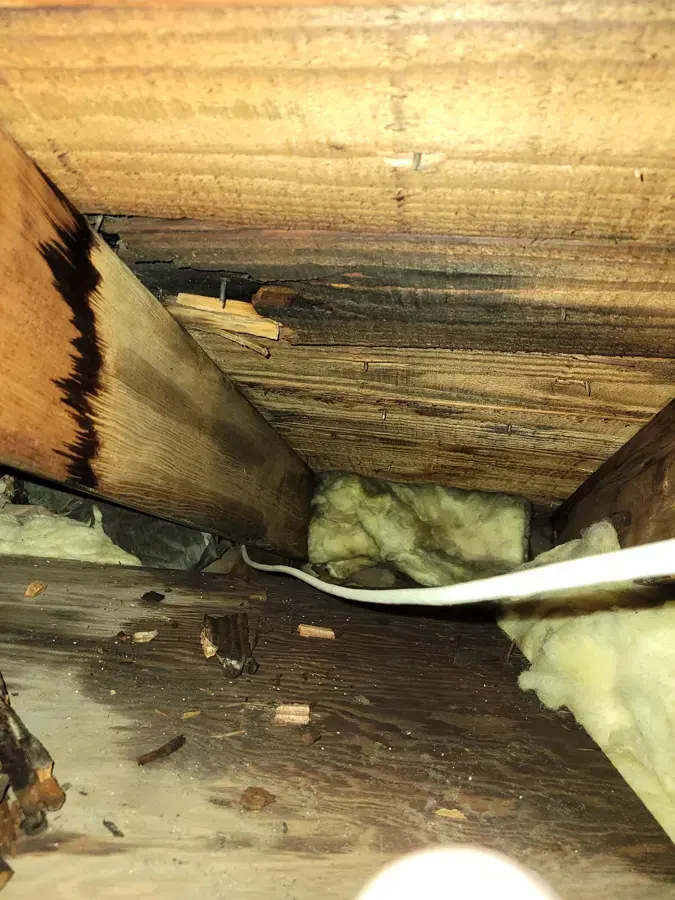
Water usually enters the attic first. It soaks the insulation, runs along rafters and drips onto the ceiling below.
The ceiling can look fine for a short time while the insulation above holds the water like a sponge. Then a stain appears, paint blisters and drywall begins to sag.
Because water spreads through insulation, the stain on the ceiling may sit far from the actual opening in the roof.
Because the leak moves along rafters, the damp patch may show up in a different room than the opening above it. Readings trace the path back to the source.
- A brown ring on the ceiling that grows after each storm
- Bubbled or peeling paint on a wall near the ceiling
- A damp smell in a closet or hallway
- Wet insulation or darkened sheathing seen from the attic hatch
First steps while the rain is still falling
The first job is to limit damage inside. The roof repair itself waits for a break in the weather.
Once the drips are under control, a roofer can be called for a repair visit, and the restoration crew can handle the wet materials in the meantime.
- Place buckets or towels under drips and move furniture away.
- Poke a small hole in a bulging ceiling only if a bucket is ready, to let trapped water out safely.
- Switch off light fixtures in a wet ceiling.
- Photograph the leak, the stain and the roof from the ground if it is safe.
- Do not climb onto a wet roof.
Tarping and removing wet insulation
A crew covers the opening with a tarp so that more rain does not get in. That is a temporary measure that buys time for a roofer.
Wet attic insulation holds water against the framing, so the soaked sections are removed. The ceiling drywall below is opened only if readings show it is wet.
This is the work listed on the roof leak water damage page.
A tarp is secured at the ridge and edges so wind does not lift it, and it is checked after each storm. It may stay in place for days until the roofer can work.
Drying the rooms below
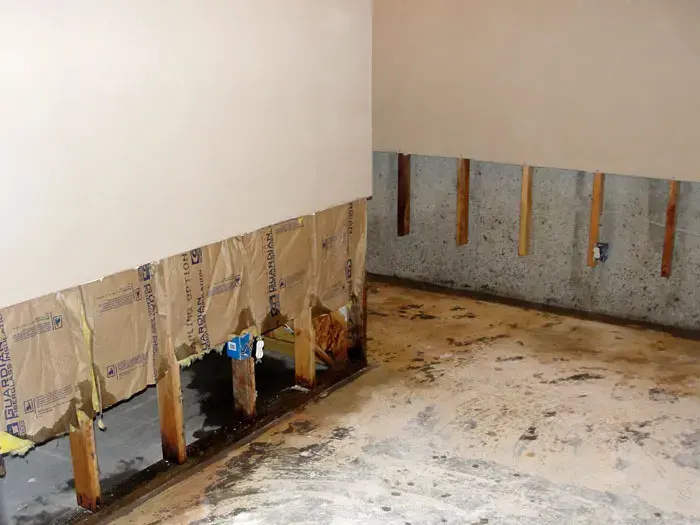
Once the source is covered, drying begins. Air movers and dehumidifiers run, and readings are taken in the ceiling, walls and floor of the rooms under the leak.
Where a ceiling has already failed, the process is the same as for a plumbing leak above a room. The ceiling leak water damage page describes how joist bays are dried and walls below are checked.
Drying often takes several days, and the crew returns to read the meters until the wood and drywall match dry reference readings.
- Moisture readings in the ceiling, walls and floor
- Removal of drywall that cannot dry in place
- Air movers and a dehumidifier running through the wet room
- A final reading before anything is closed up
Getting a roof ready before the wet season
The best time to look at a roof is before November, when dry weather makes it possible to inspect and repair. Small repairs are far cheaper than a ceiling replacement.
Owners of older homes can walk the yard after a dry spell and look for lifted shingles, cracked flashing or granules in the gutter. A roofer can do a closer check on the roof itself.
Inside, a look through the attic hatch on a dry day shows stained sheathing or damp insulation that was missed during the last storm.
- Clear gutters and downspouts before the first storm.
- Check flashing around chimneys and vents.
- Trim branches that scrape the roof.
- Keep a tarp and a flashlight where they can be found fast.
When the storm brings more than a roof leak
A storm that opens a roof may also push runoff toward foundations. Wildcat Creek and San Pablo Creek cross the city to San Pablo Bay, and the county flood control district and the Army Corps rebuilt the lower channels after repeated winter flooding.
If water also enters at ground level, storm and creek flood cleanup covers that work, and structural drying covers the drying of framing afterward.
An owner who has seen both a roof leak and a wet floor should list each source, because a claim may treat them separately.
Questions
How can an owner tell if a ceiling stain is a roof leak?
A stain that grows or reappears after storms and is brown around the edges usually points to the roof. A stain that appears in dry weather suggests plumbing.
Is it safe to climb on the roof to check?
No. A wet roof is dangerous. Photos from the ground and a view from the attic hatch are safer.
Why remove attic insulation?
Wet insulation holds water against framing and the ceiling, so soaked sections are removed so the structure can dry.
Does tarping fix the roof?
No. A tarp is temporary protection. A roofer repairs the roof, and the tarp keeps rain out until that happens.
Should the ceiling be opened right away?
Only if it is sagging with trapped water or readings show it is wet. Otherwise it is dried in place.
When is the best time to check a roof?
Before the wet season, which runs from about November to March in San Pablo, while dry weather makes inspection and repair easier.