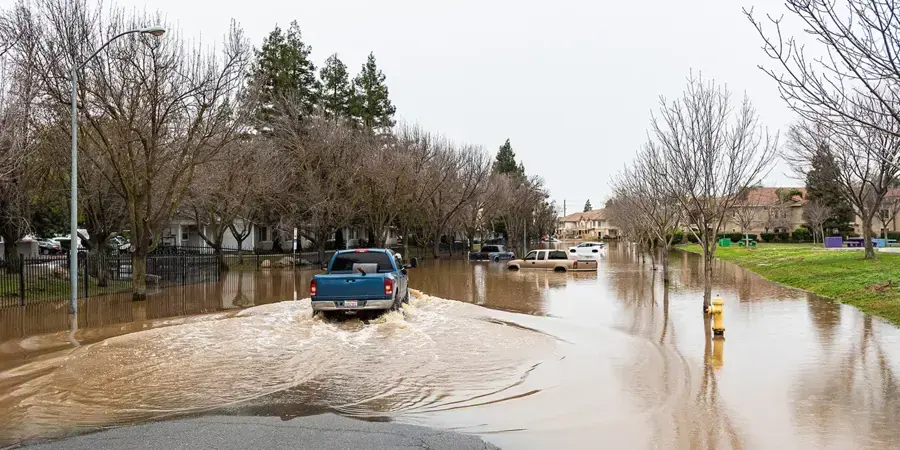
North Richmond sits near Wildcat Creek and San Pablo Creek, two channels that carry winter storm runoff toward San Pablo Bay. When a creek spills toward a home, the water that arrives is not the same as water from a broken pipe.
Key takeaways
- Creek flood water carries mud, debris and contamination, so it is handled as contaminated water.
- Stay out of standing water and keep children and pets away until the area is assessed.
- A 1993 flood control project widened Wildcat Creek and San Pablo Creek channels and built levees near North Richmond.
- A 2009 county official warned the creeks had lost capacity to sediment and vegetation, so storm runoff remains a real concern.
- Document the water level and damage before cleanup starts, because the photos support an insurance claim.
Where North Richmond sits and why creek water matters
North Richmond is an area almost entirely surrounded by Richmond city limits. It sits near Wildcat Creek and San Pablo Creek, which run from the hills toward San Pablo Bay.
The rainy season in Richmond runs from late October to April, and most of the rain falls in storms between November and March, at roughly 3.3 to 4.91 inches per month. January and February are the rainiest months.
In a hard storm, creek channels carry more than they were built for. When water leaves the channel it crosses yards, driveways and sometimes door thresholds.
What the history of the creeks tells a homeowner
A 1993 flood control project widened the creek channels, built levees and restored habitat. After that work, FEMA removed North Richmond from its floodplain.
In 2009 a county official said stricter FEMA levee rules could put all of North Richmond back in a federal floodplain. The reason given was that the creeks had lost capacity because sediment and vegetation had built up.
None of this predicts a particular storm. It does show why property owners near these creeks treat winter runoff seriously, and why the storm and creek flood cleanup service in Richmond exists.
Levees and channels help, but they work only while they have room to carry water. Sediment and plant growth quietly take that room away between storms.
Why creek water is treated as contaminated
Creek water picks up soil, vegetation, road runoff and whatever else is on the ground along its path. By the time it reaches a house it is neither clean nor safe to handle.
That is why restoration crews treat flood water as the most contaminated category. Porous materials that soak it up, such as carpet pad, insulation and the lower part of drywall, usually cannot be saved.
- Wear boots and gloves, and keep skin covered if contact cannot be avoided.
- Do not run fans or vacuums to move the water yourself.
- Throw away food that touched floodwater.
- Keep children and pets out of the wet area.
The first steps at the property
Safety comes before cleanup. Water near outlets or the electrical panel is a shock risk, so power to the wet areas should be switched off only if it can be done from a dry spot.
The city asks residents to report street flooding to its collection system crew, which keeps the problem visible to the people who maintain drains. Calls about private property damage go to the restoration crew.
A restoration crew arrives with protective gear and a plan, and the owner does not need to wade in to prove how bad it is. Photos from a doorway are enough.
- Photograph the water level on walls and furniture before moving anything.
- Write down when the water arrived and how far it spread.
- Lift small valuables off the floor, but leave heavy items in place.
- Do not open or force doors against standing water.
- Contact the insurer early and keep every receipt.
How extraction and drying work after creek flooding
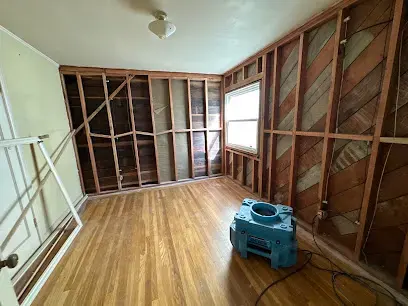
Standing water comes out first. Truck mounted extraction pulls it from floors, and a water extraction crew keeps working until the surface is clear of standing water.
Next, wet materials that cannot be cleaned are cut out. Surfaces that stay are treated, and air movers and dehumidifiers dry the structure to a reading.
The crew checks wall bottoms, baseboards, subfloor and any cavity where water could sit. Each of those can look dry on the surface while it still holds moisture.
After the water goes down
Once the creek water is gone, the house is not yet safe to settle back into. Mud, silt and wet materials stay behind, and they hold contamination long after the flood has dropped.
A crew sorts what can be cleaned and what has to go. Furniture with soaked padding, mattresses, books and anything stored on the floor are common losses, while hard surfaces and framing are usually cleaned and dried.
Owners should resist the urge to rebuild fast. Closing up a wall with wet insulation inside is how a second round of damage begins.
- Do not turn the heat up to dry the house, since warm damp rooms are slow to recover.
- Keep a list of every item thrown away, with a photo if possible.
- Ask the crew for moisture readings before any drywall is replaced.
- Check FEMA flood maps directly if a question about a flood zone comes up, because the maps are the source for that answer.
Reading the weather season by season
The National Weather Service recorded October 24, 2021 as the wettest day for many Bay Area cities during an early season atmospheric river. That event is a reminder that the first big storm of the season can arrive before owners have prepared.
Clearing yard drains, keeping debris out of the way of creek flow and knowing where valuables can be raised are small habits that help. A storm flood cleanup service nearby covers the same kind of work.
Questions
Is creek flood water safe to touch?
No. It carries soil, debris and contamination from the ground along the creek, so it is handled with protective gear and treated as contaminated water.
Which creeks are near North Richmond?
Wildcat Creek and San Pablo Creek. Both run toward San Pablo Bay, and both were part of the 1993 flood control project.
Does North Richmond currently sit in a flood zone?
That is a question for FEMA flood maps, which an owner can check directly. Only the 1993 removal from the floodplain and the 2009 concern about creek capacity are documented here.
What materials usually cannot be saved after creek flooding?
Carpet pad, insulation and the lower part of drywall that absorbed the water. Hard surfaces and framing are often cleaned and dried instead of replaced.
When should photos be taken?
Before anything is moved or removed. Photos of the water level and the damage support the insurance claim and show the crew what the loss looked like.
How long does it take before a house is dry after creek flooding?
It depends on how far the water spread and what materials it reached. A crew takes readings in walls and floors and keeps drying until they match normal levels, so the answer comes from the meters, not the calendar.