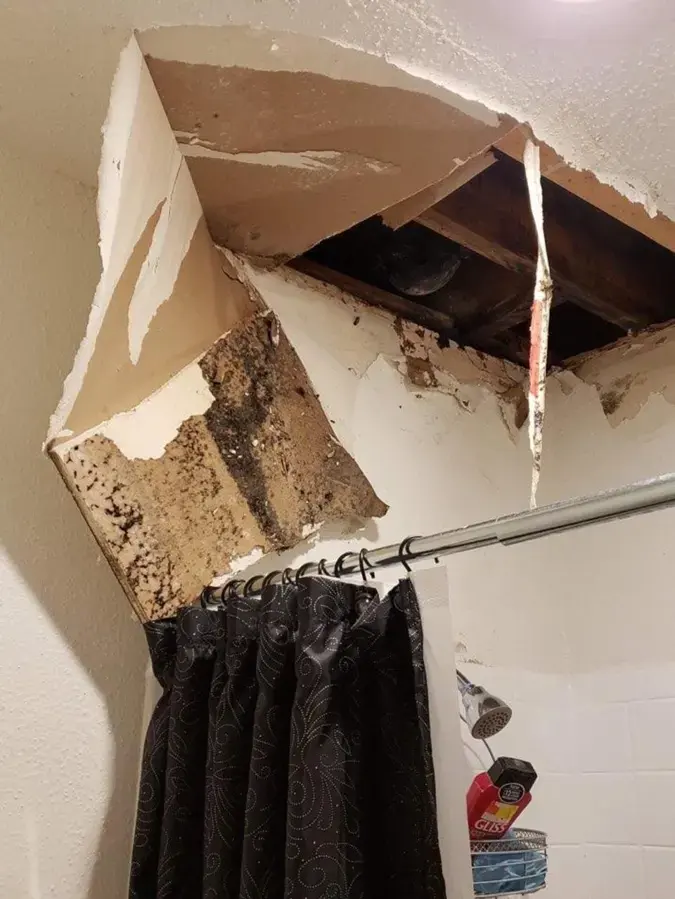
Most of Hercules is single family houses, but the newer waterfront neighborhoods add townhomes, condos and apartments. In a building where one home sits above another, a brown stain on the ceiling usually means someone else's water has arrived.
Key takeaways
- Hercules is mainly suburban single family homes, with townhomes, condos and apartments in the newer waterfront areas.
- A ceiling stain in a stacked unit may come from a supply leak, a drain or an appliance upstairs, not from rain.
- A leak that runs only while an appliance runs often points to a washer, dishwasher or similar source.
- Document the stain, notify the building manager and neighbor, and keep water away from light fixtures.
- Wet drywall and insulation above the ceiling are opened only where readings show water.
Where stacked homes appear in Hercules
Hercules grew quickly after 1970, and its themed subdivisions of single family homes are what most people picture. Newer areas add different building types.
The Hercules Waterfront, also called the Bayfront, is a 40 acre mixed use, transit oriented project at the historic town center. Its master plan and form based code cover over 1,200 units.
Victoria by the Bay includes townhomes, and Samara Terrace is a 52 unit senior apartment community. In every one of these buildings, plumbing for one home passes through the ceiling or wall of another.
Reading the stain: supply, drain or roof
The shape and timing of a stain say a lot. A leak from a supply pipe flows constantly, while a drain leak shows up when water is used above.
Rain leaks come from the other direction. Hercules receives about 23.35 inches of rain a year, mostly from November to March, so a stain that appears only after a storm points to the roof.
Samara Terrace, the Waterfront and Victoria by the Bay were built at different times, so the sources differ from building to building.
A plumber or a building manager can confirm the source by running one fixture at a time while someone watches the ceiling below.
Keeping a short written note of when each drip appears helps the plumber find the source much faster.
- Constant drip, even in dry weather: a supply pipe or a fixture shutoff
- Drip when the shower or tub drains: a drain pipe or a tub seal
- Drip during a wash cycle: a washing machine hose or drain
- Stain after storms only: the roof or an exterior wall
How an appliance leak reaches a neighbor
A washer, dishwasher or ice maker leaks quietly. Water runs under cabinets, soaks the floor and drops through the subfloor into the ceiling cavity of the unit below.
By the time a stain shows below, the damage upstairs may be much larger. That is why the appliance leak water damage service looks at both homes.
What the owner below should do first
The first step is to protect people and property. A bulging ceiling can hold a lot of water, and a fixture can fill with it.
A ceiling that has already fallen is a bigger job, and the debris is wet and heavy. Wear gloves and sturdy shoes while picking it up.
- Keep people and pets away from a sagging area.
- Turn off the light and fan on a wet ceiling and do not switch them back on.
- Place a bucket under any drip and move furniture aside.
- Tell the building manager and the neighbor above so the water can be shut off.
- Photograph the stain, the ceiling and anything that was damaged.

How a wet ceiling is opened and dried
A moisture meter reveals where water sits above the ceiling. If the drywall sags, a small opening lets the water out safely and relieves the weight.
Wet drywall and insulation are removed in the affected section. The joist bays are dried with air movers, and walls below the leak get readings too.
This is the work described on the ceiling leak water damage page, and the same crew can dry the area while the leak source is repaired upstairs.
If the unit above is empty or the owner cannot be reached, the building manager should be told so the water supply to that unit can be shut off.
- Mapping of the ceiling and the wall beneath it
- A controlled opening where water has pooled
- Removal of wet insulation and drywall only where needed
- Drying with readings repeated until the framing is dry
Odor, stains and the repair afterward
A stain is cosmetic, but dampness is not. Insulation and drywall that stay wet can develop a stale smell, and paint will not stick to a wet surface.
For that reason, repainting waits until readings show the ceiling and the framing above it are dry. A patched surface that is covered too soon can hide a leak that keeps going.
When the upstairs source has been repaired, the restoration crew confirms that the area is dry and the owner can schedule drywall, texture and paint.
- Do not paint over a stain until the ceiling has been checked.
- Keep records of every repair and every wet reading.
- Ask neighbors to run the suspect fixture once so the source can be confirmed.
- Watch the ceiling for new rings or drips over the next weeks.
Permits, repairs and who pays
The City of Hercules building page says electrical, plumbing and mechanical work requires a permit. A plumbing repair in the unit above, or a tank replacement, may need one.
Questions about who pays are answered by the building rules and the insurance policies involved. Keeping photos, dates and every receipt makes any claim easier to explain.
The Hercules service page shows the other water jobs the city sees, from burst pipes to storm runoff.
In a building with shared walls, the order of work matters: stop the leak, dry the area and then repair finishes. Skipping a step can bring the stain back.
Questions
How can an owner tell if a ceiling stain comes from the unit above?
A stain that appears while water is used upstairs, or in dry weather, points to plumbing above. A stain that shows up only after storms points to the roof.
Is a sagging ceiling dangerous?
It can be. Wet drywall can hold a lot of water and may fall, so people stay clear until a crew relieves the weight safely.
Does plumbing work in Hercules need a permit?
The city building page says electrical, plumbing and mechanical work requires a permit, so a repair above may need one.
Who should be told first?
The building manager and the neighbor above, so the water can be shut off, then the insurer once photos are taken.
Does a small stain need drying?
Often yes. A small stain can hide a wet joist bay, so readings are taken before the ceiling is painted over.
How long should a ceiling stay unpainted?
Until readings show the drywall and framing above it are dry. Painting a wet ceiling can trap moisture.